Parambikulam Tiger Reserve has always been our go-to place from our early days of wildlife learning. Our first experiences of forest birdwatching, tough hikes through dense forests, and watching large mammals up close all happened there. In fact, we had stayed in almost all the accommodation options in Parambikulam — Veettikunnu Island Nest, Tented Niche, Timber Nook, and Bison house. After covering all those stays, we felt it was time to explore other forests. And just like that, nearly 15 years passed since our last visit to Parambikulam.
Recently, I wanted to take the little one on a jungle safari. But since she is still a toddler, a long safari wouldn’t work — at best she could enjoy a two-hour ride. Around the same time, we got an opportunity to conduct a training session for the Trek Tamil Nadu team at the Tamil Nadu Forest Academy in Coimbatore. That felt like the perfect chance to combine the trip with a visit to Parambikulam.
Even then, I wasn’t fully convinced about booking a stay inside the reserve. It was the peak dry season — the first week of March — and I kept wondering if it would really be worth visiting then. However, since we planned to go on a weekday, we expected fewer tourists, which encouraged us to go ahead with the plan. After visiting our dear friend in Pollachi, we started towards Parambikulam. Before entering the forest, I bought plenty of snacks for the kiddo, unsure if we would find anything suitable for her once we crossed Topslip.
But the moment we paid the entry fee at Topslip and began driving along the forest road, we immediately realized how much we had missed being inside a real forest over the past few years. Though Vinod regularly visits KKWLS and KMTR, this place felt different — perhaps because of the memories it holds for us. Soon the forest began to welcome us in its own way.
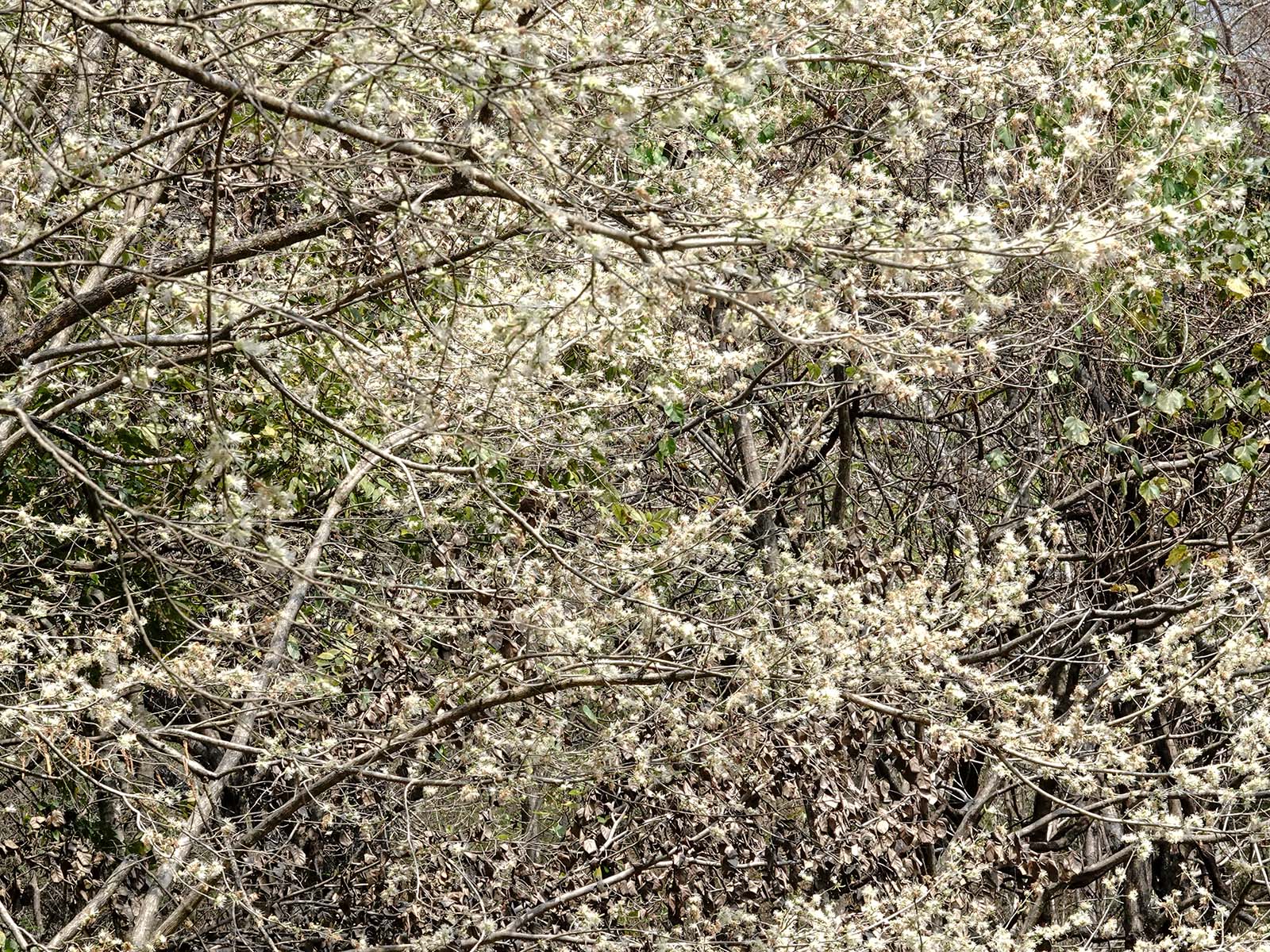
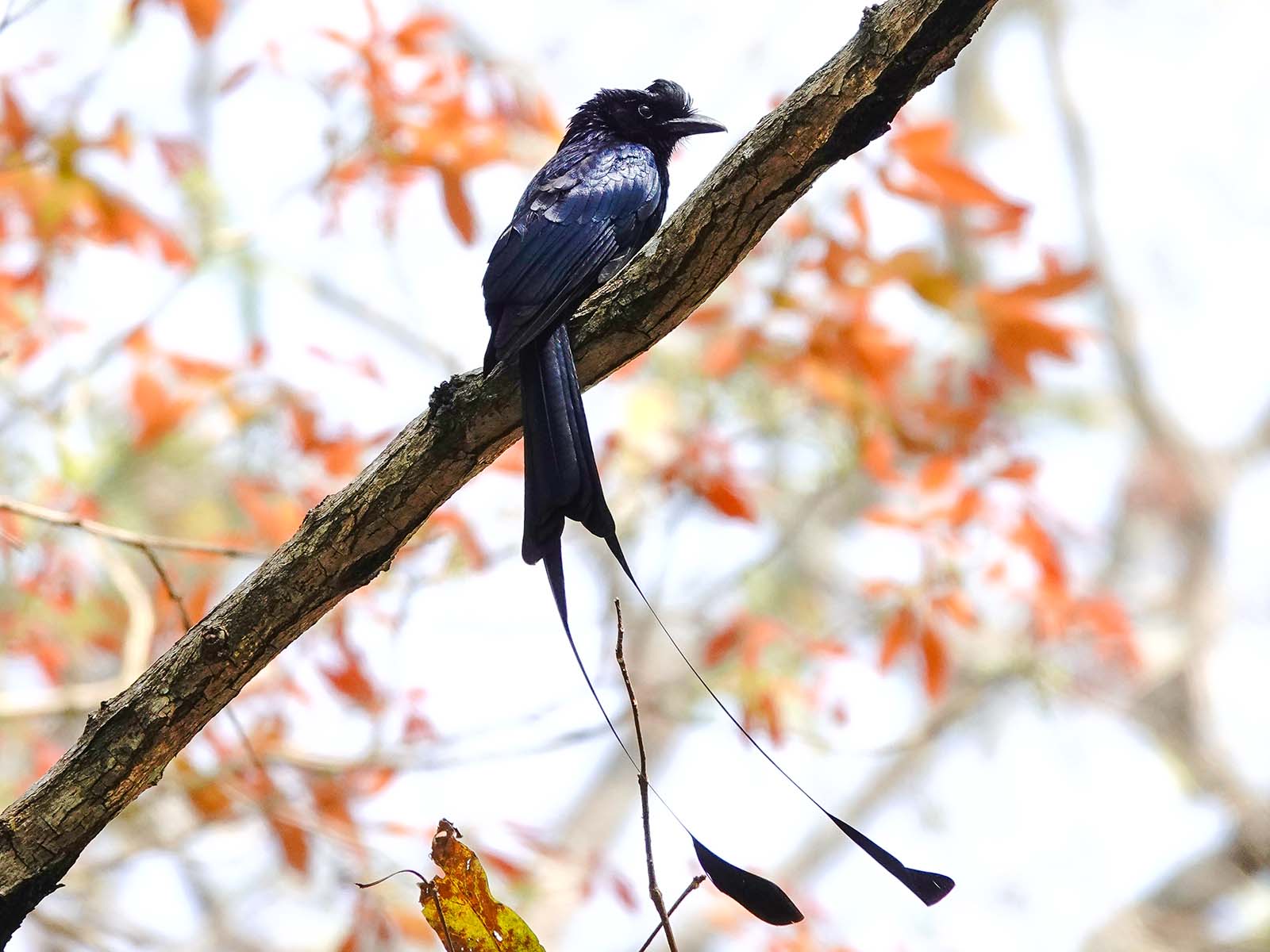
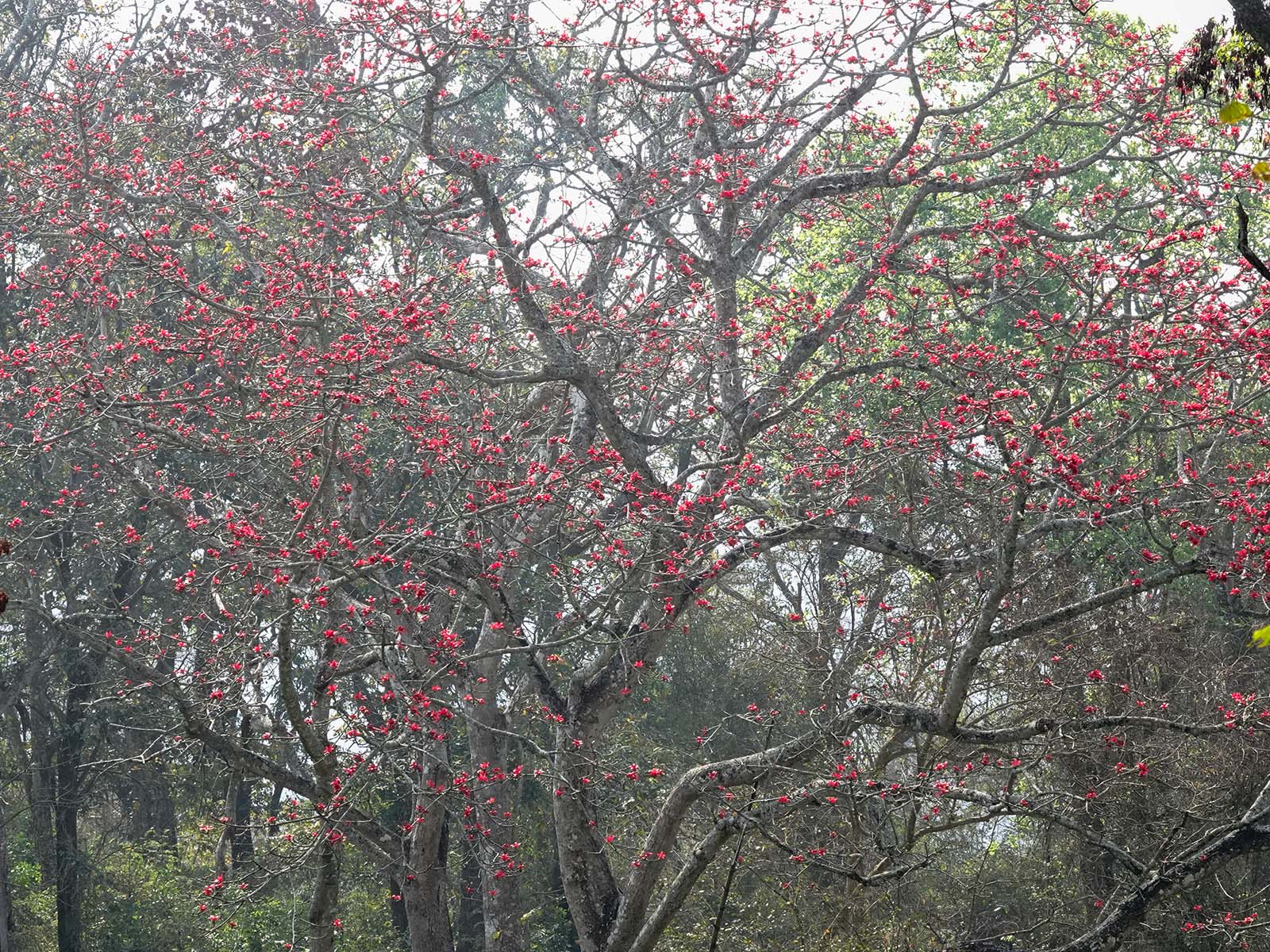
Alangium salviifolium was in full bloom, its fragrant white flowers filling the air and giving us a strong feeling of spring, even though the weather was quite hot. Bird calls echoed from all directions, reminding us how alive the forest was. Then came the real visual treat — Bombax ceiba. The tall, spreading trees were covered in bright pink flowers, standing out beautifully against the dry forest backdrop. Racket-tailed drongos and Southern hill mynas were actively feeding on the flowers, making the trees even more lively and vibrant.
It already felt like Parambikulam was welcoming us back after all these years.
As the bamboo groves began to line the roadside, many of them looked lifeless at first glance. Bamboo, after all, is a classic example of a monocarpic flowering grass—most species flower only once in their lifetime and then die. This mass flowering, known as gregarious flowering, happens at long intervals (often anywhere between 30 to 120 years depending on the species), where entire populations bloom simultaneously across vast areas. After flowering, the parent plants divert nearly all their stored energy into seed production, eventually drying out and dying, but in doing so, they create ideal conditions for the next generation of seedlings to thrive.
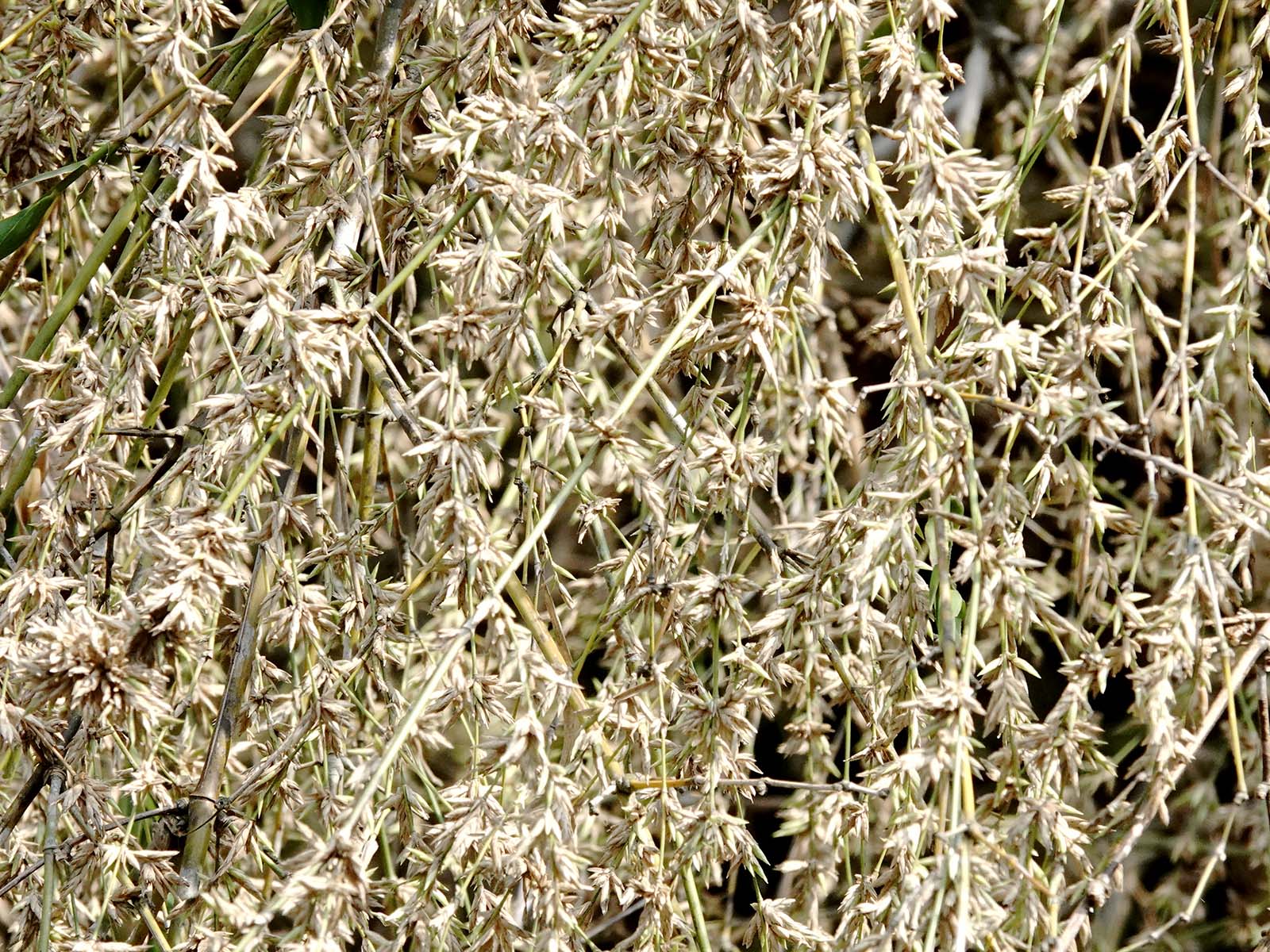
Soon after, we started noticing bamboo groves in full bloom. Unlike the seemingly dead patches, these flowering groves were bursting with life—filled with constant bird calls. Vinod pointed out that the activity was due to Common Rosefinches, and once he said it, I began noticing them everywhere. The males, with their striking pinkish-red plumage, stood out beautifully against the dry landscape, while the females blended in with their pale brown tones.
We had witnessed a similar spectacle years ago in Siruvani, Coimbatore—huge flocks moving through flowering bamboo—and it felt incredibly special to experience that scene all over again.
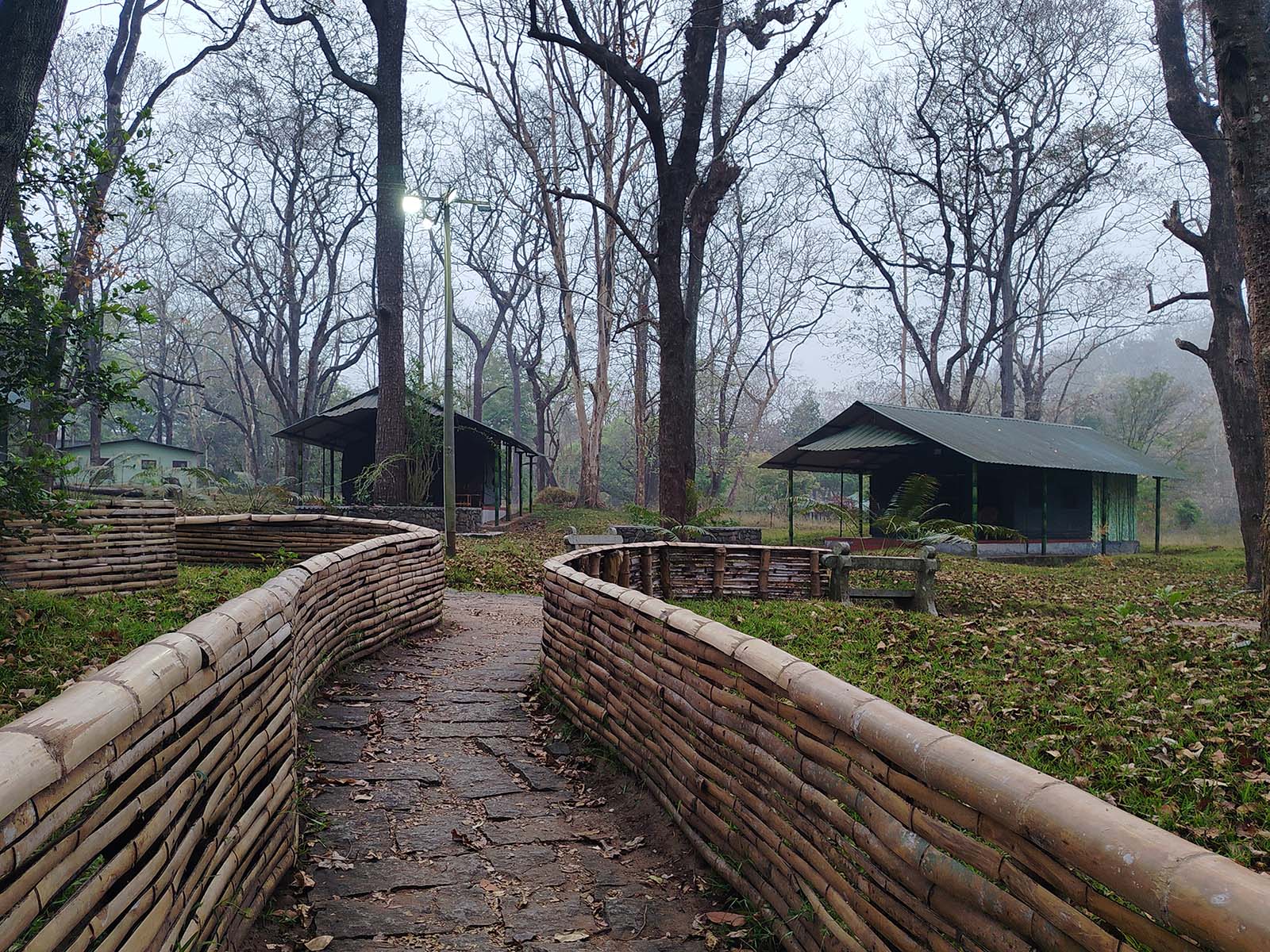
Once we reached Parambikulam Tiger Reserve and checked into our tented niche stay, we were welcomed by a large peacock perched high on the branches of an old tree. It felt like it was blowing a horn every time someone entered the tent. The tent looked exactly the same as it did 15 years ago—no upgrades at all.
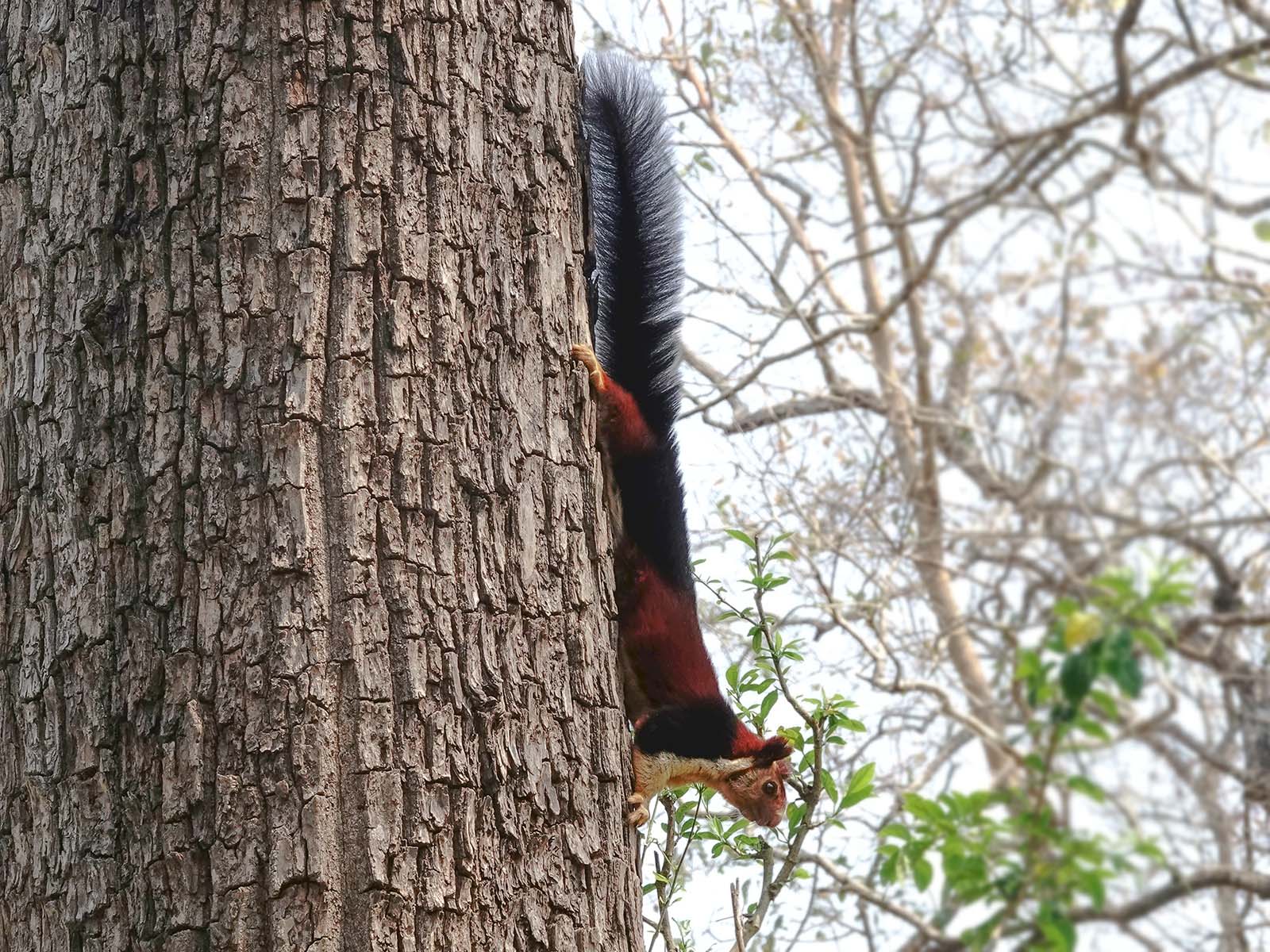
An Indian Giant Squirrel was leaping around, its large fluffy tail waving dramatically—more than enough to keep our toddler entertained. The call of the Common Hawk-Cuckoo echoed through the forest. We quickly got ready for the evening safari.
Almost immediately during the safari, we came across a herd of spotted deer and, at a distance, a massive male sambar. When we stopped near the dam, we spotted an elephant on the opposite side. At every halt, we did a bit of birdwatching, and Vinod casually spotted a Sri Lankan Frogmouth.To be honest, I was a bit frustrated—he had already seen a Smooth-coated Otter near my friend’s house early that morning and then the frogmouth in the evening, both of which I completely missed, even though I was standing right next to him.
The guide pointed out Karimala Peak to the group, mentioning that it is the tallest peak within the sanctuary. I asked him if trekking was still allowed there, and he replied that all such treks had been stopped many years ago. When I told him that we had actually hiked to that very peak about 15 years ago—and that it was one of the most memorable treks we’ve ever done—he was completely taken aback. I felt a surge of happiness that we were able to visit that sacred place and how lucky we are !
In a few stretches, Butea monosperma was in full bloom, and the sight of its bright orange flowers was absolutely captivating. We noticed a few locals collecting bamboo rice along the roadside—it felt like such a valuable seasonal food source, not just for people but for so many wild beings as well. Later, we went for the bamboo raft ride and spotted a mugger resting quietly on the bank. And then… we had to witness a rather horrifying dance reel session at the riverbank by about 60 retired nurses visiting the sanctuary. Why… just why?
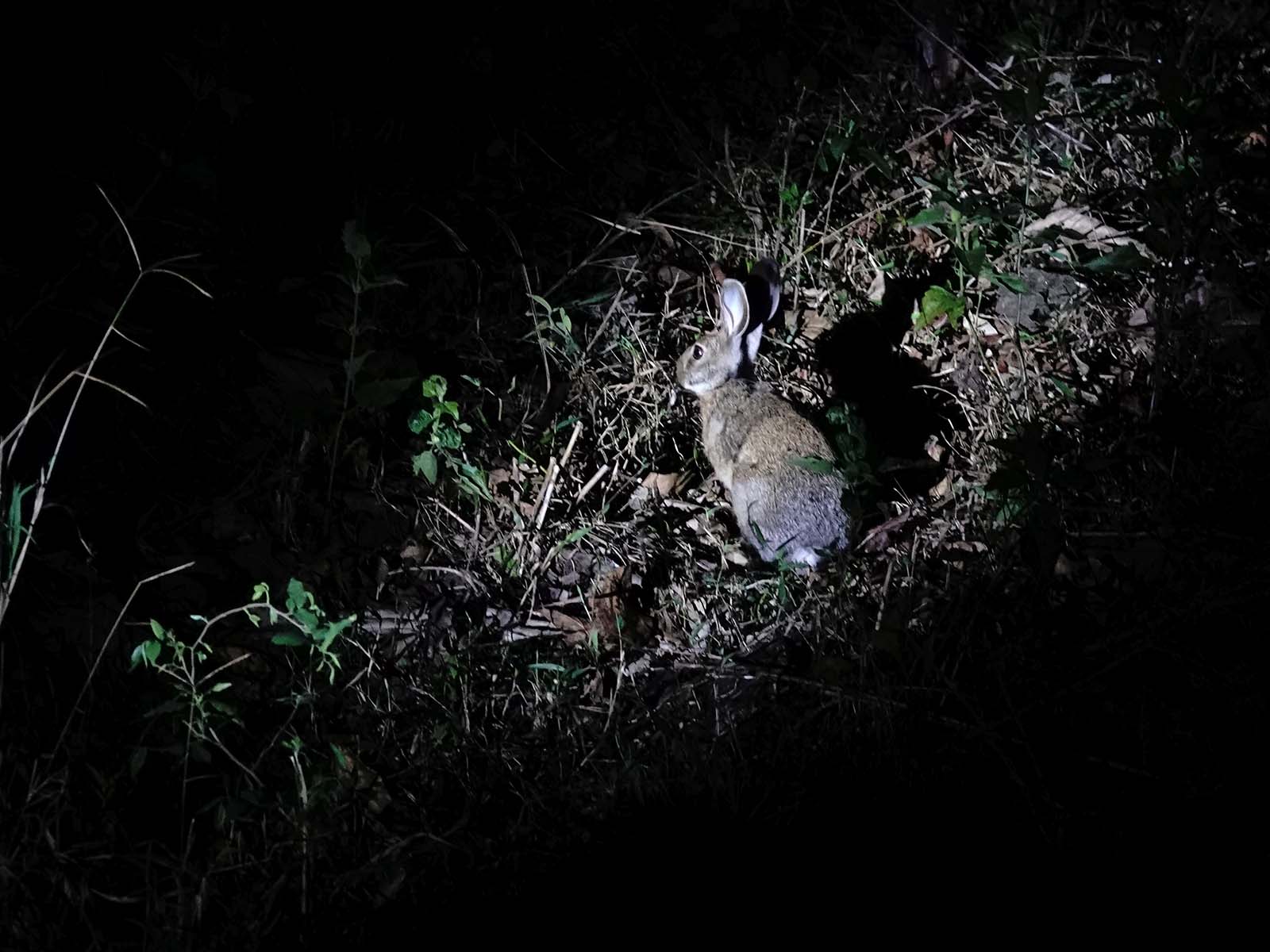
On the way back, we came across a Wild Boar, Indian Gaur, and a Black-naped Hare, but unfortunately, no elephants this time. Even at midnight, the calls of the Common Hawk-Cuckoo echoed through the forest.
The next morning, Vinod headed out for the short trek included in the tented niche package. Since our toddler wasn’t allowed on the trek, we stayed back and spent time around the tented area. I watched five Common Hawk-Cuckoos gathered in a tree before they gradually dispersed in different directions. Meanwhile, Common Rosefinches kept flying past me, which was fascinating. Watching all this, I couldn’t help but wonder how incredibly rich and vibrant this natural world must have been before this era of massive habitat loss.
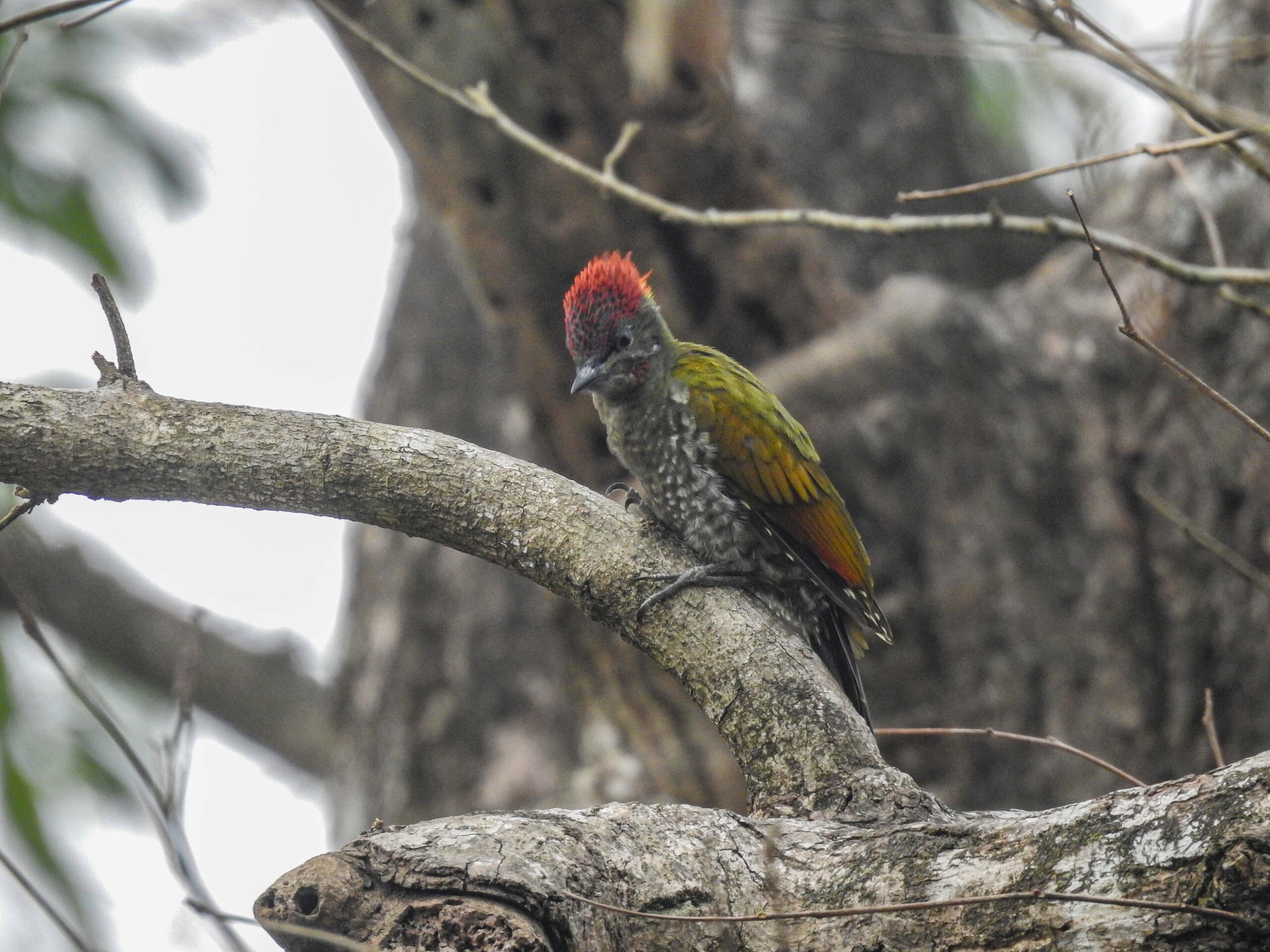
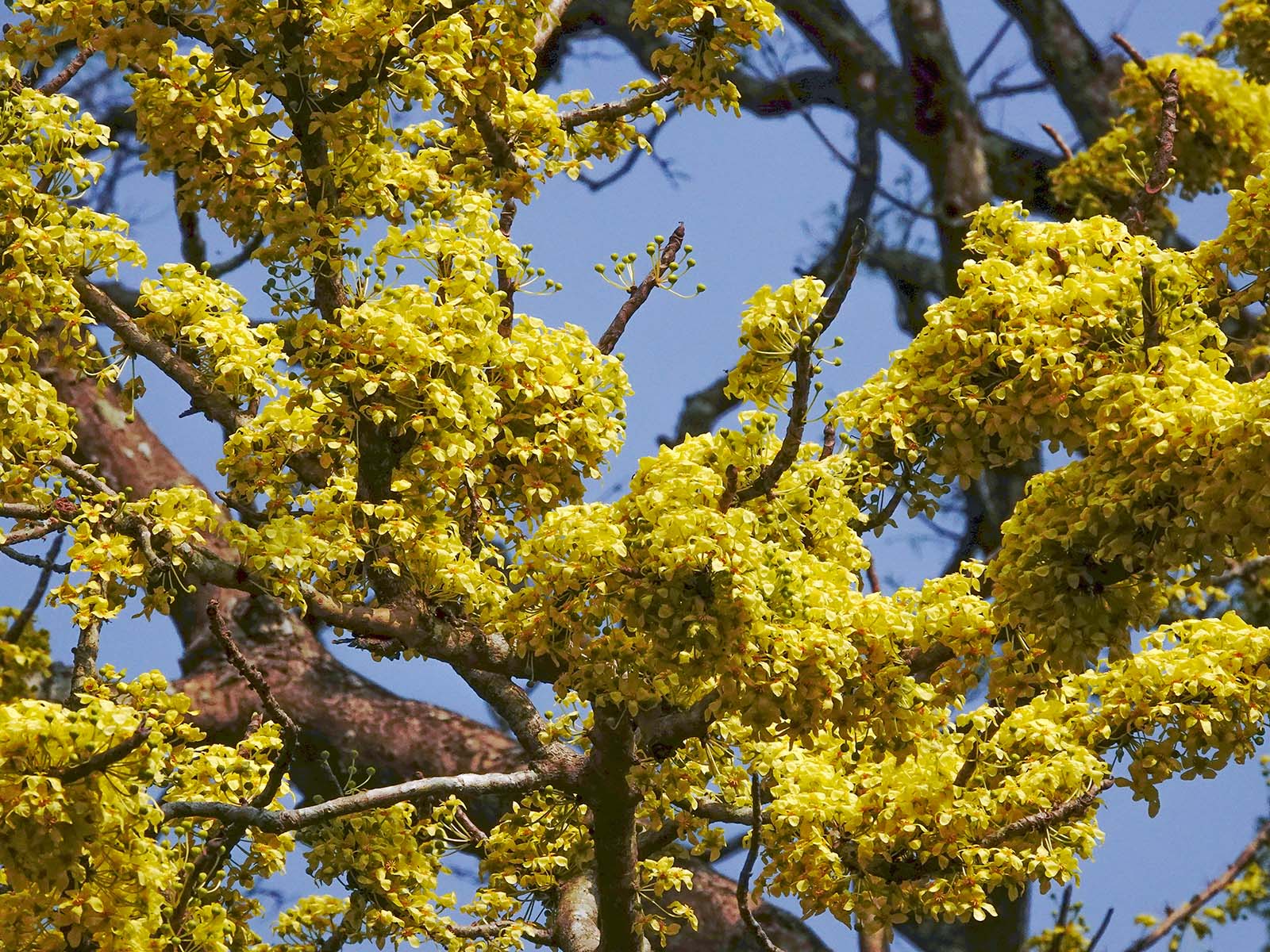
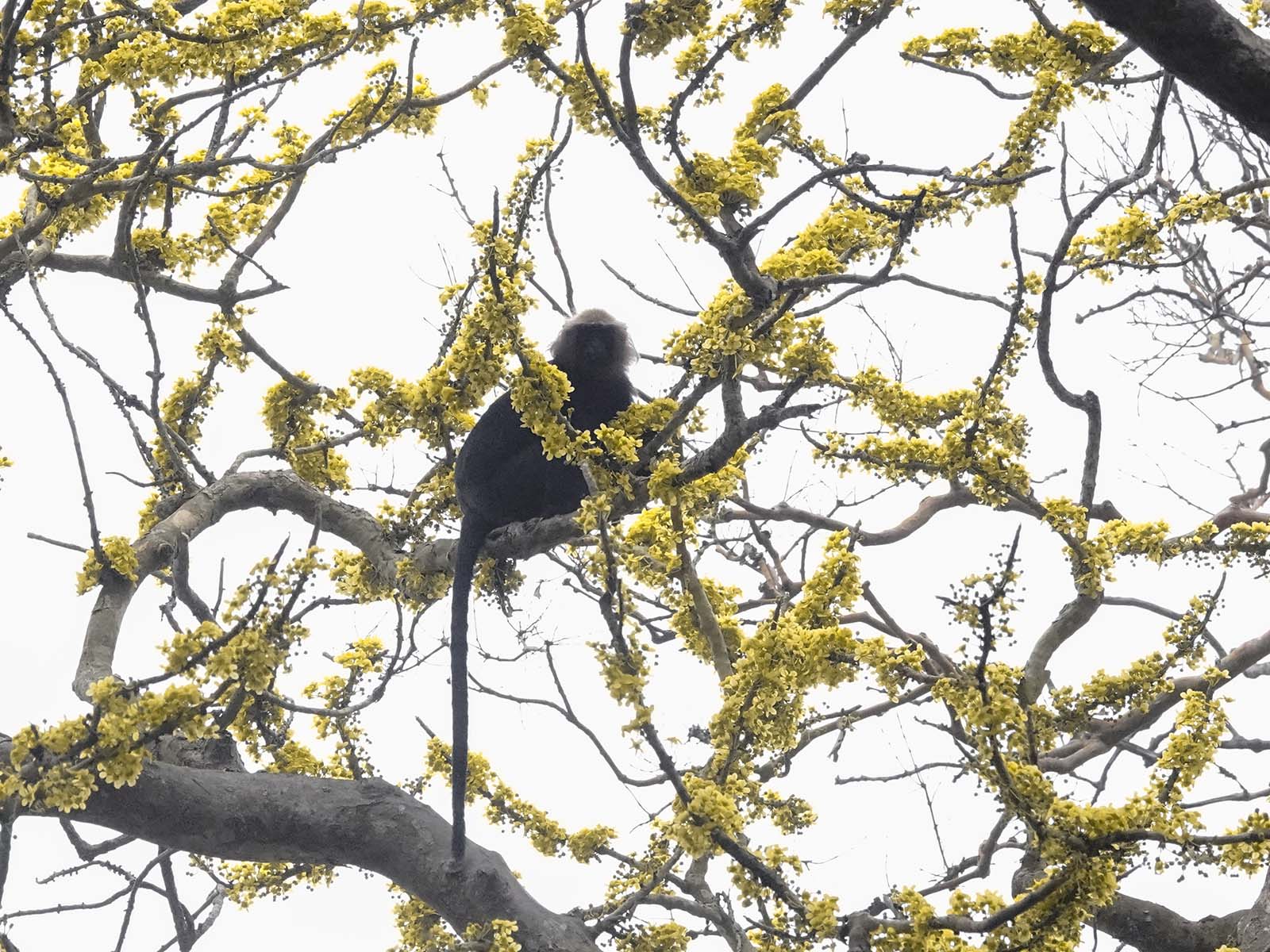
My little one eventually had enough of my birdwatching, so we headed back to the tent. There, I briefly spotted a Malabar Whistling Thrush, which flew away as soon as it noticed us, while a pair of Lesser Yellownape seemed completely unbothered, busy in checking the insects on the wood. Vinod returned from his trek completely captivated by the blooming of Dillenia pentagyna. The vibrant yellow flowers were even more striking with Nilgiri Langur perched on the branches, leisurely feeding on them. The contrast of the bright yellow blossoms against the langurs’ glossy black fur created a beautifully dramatic and truly photographic moment.
The food was quite average and not very toddler-friendly, but since we had packed plenty of snacks, it didn’t really bother us. We were able to fully soak in and enjoy the beauty of spring in Parambikulam.
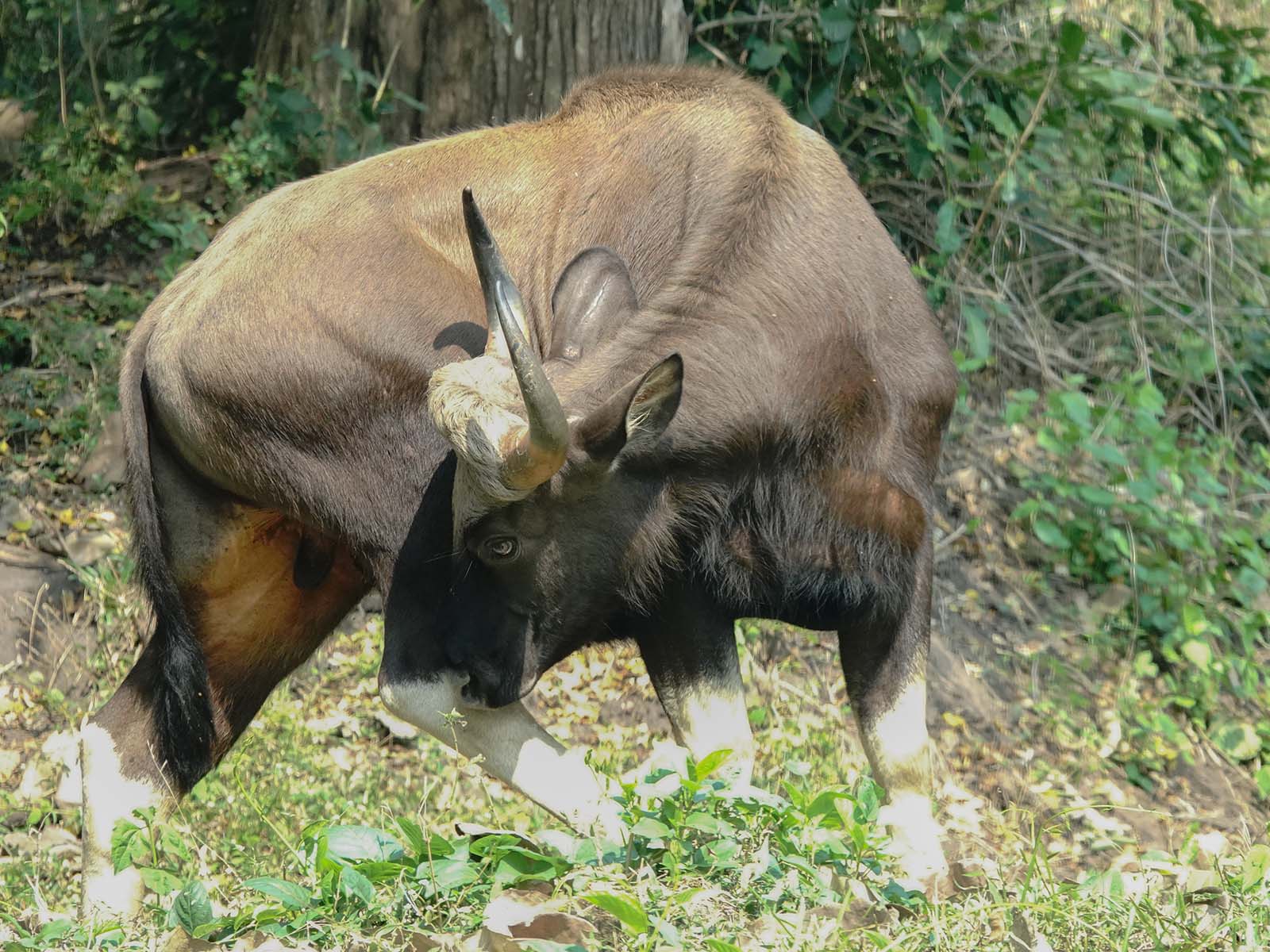
On the way back, we made frequent stops to watch flocks of Common Rosefinches fluttering through the bamboo groves. We also spotted Indian Gaur and Tufted Gray Langur along the roadside. The moment we exited the sanctuary and entered the human-dominated landscape, the entire vibe shifted instantly. So we rolled up the windows, turned up the music, and began our long drive back home.