During our time in Taman Negara, we didn’t limit ourselves to just exploring the national park. Whenever we found a little extra time, we made it a point to visit the nearby Hornbill Valley — a place that had caught our attention both for its name and the promise it held for bird enthusiasts like us. The name raised our hopes of spotting hornbills. As we visited the Taman Negara national park during the early hours of dawn, we visited Hornbill valley at noon or dusk.
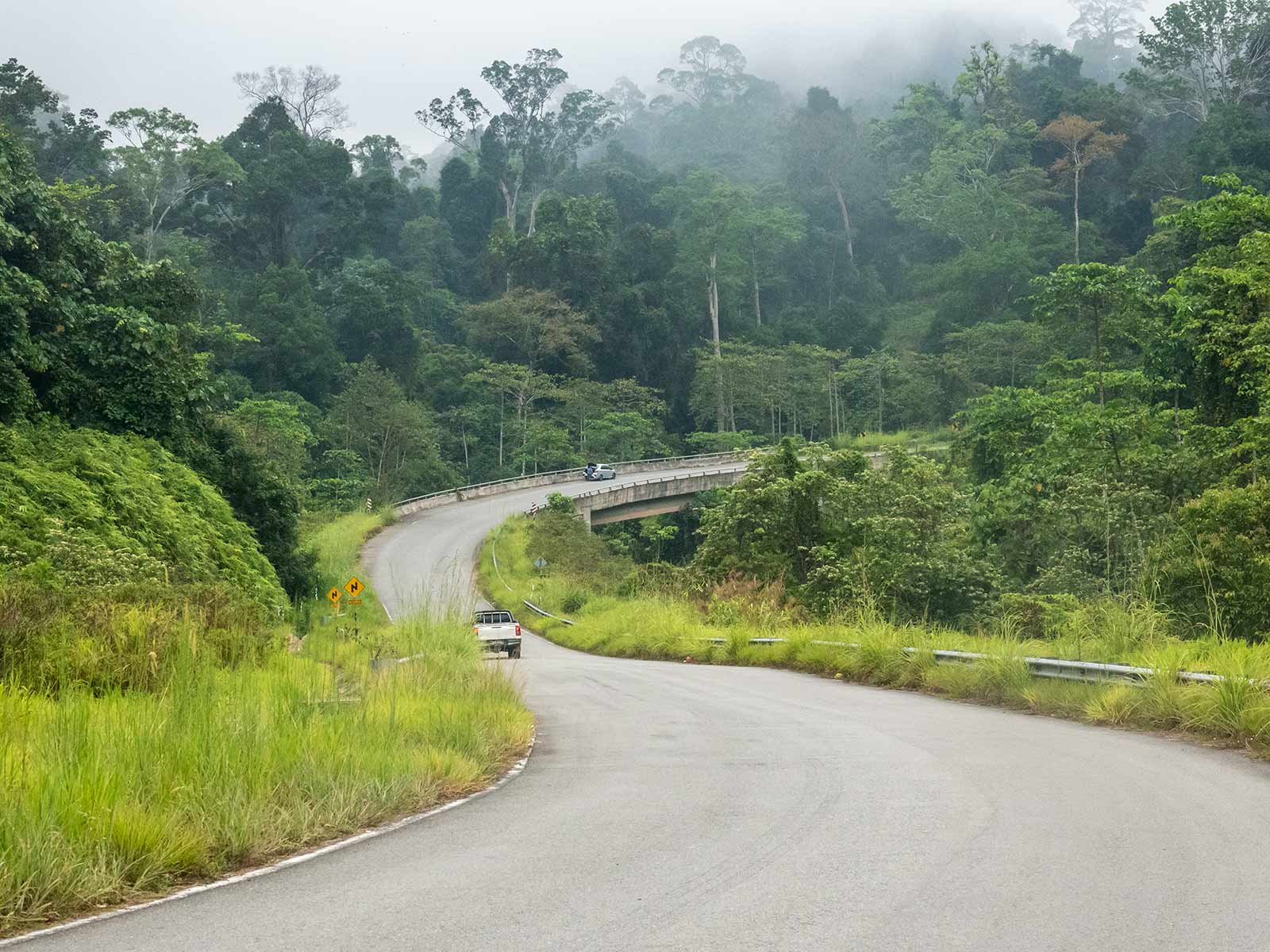
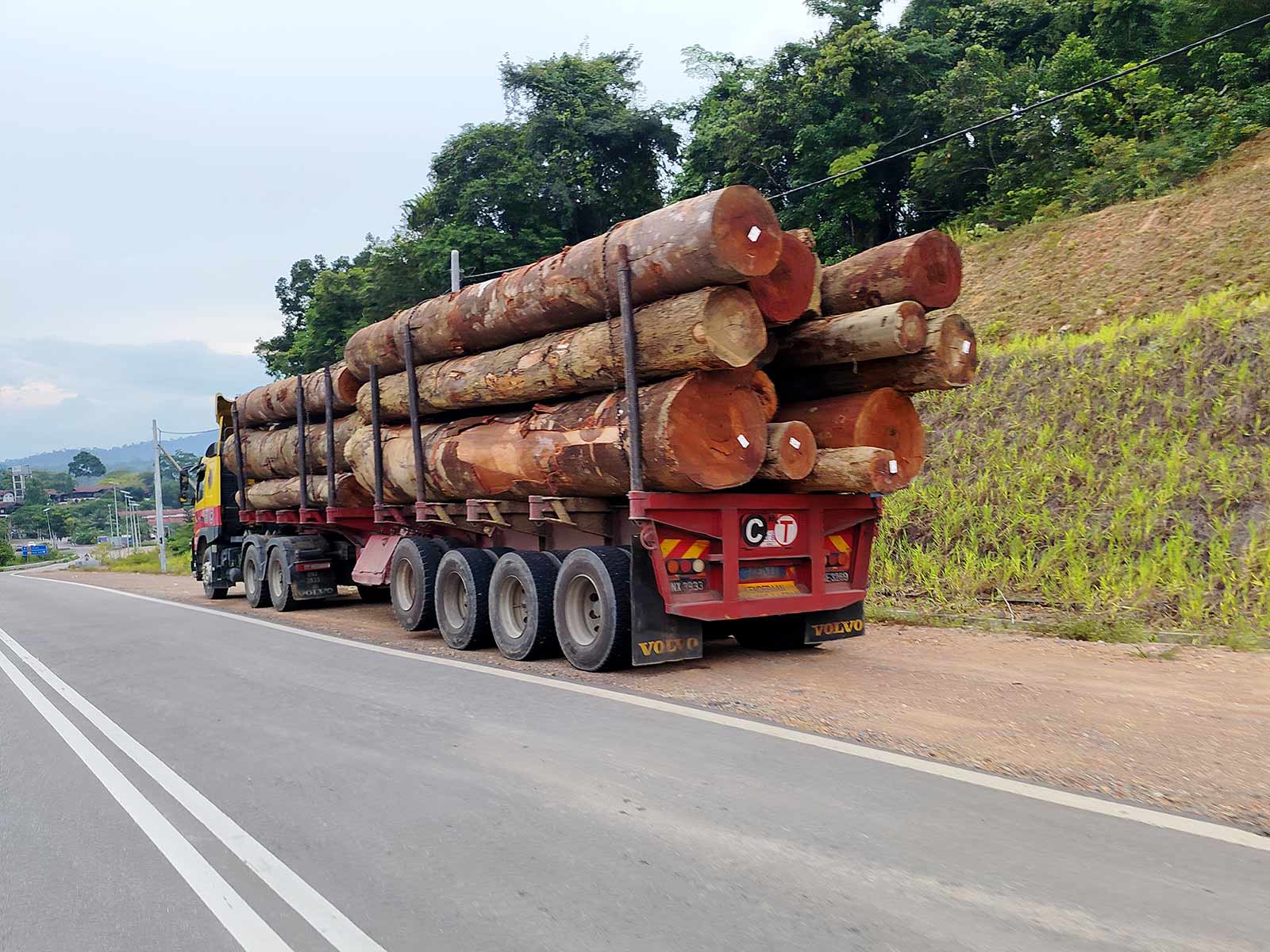
Hornbill Valley isn’t a designated protected area. It’s more of a lush, green stretch along the roadside — a surprisingly rich habitat dotted with tall forest trees, small pools of water, and thick undergrowth that together create an inviting refuge for birds. Despite its natural beauty, we had to remain cautious while birdwatching, as the road that winds through this area is active with fast-moving and heavy vehicles. We often found ourselves standing right on the edge of the narrow road, listening for bird calls while keeping one eye on the traffic. The narrow road was busy with fast-moving vehicles, including heavy trucks carrying massive wooden logs. Watching these trucks pass by was heartbreaking; each load was a reminder that tall, old trees were still being cut down daily, despite all the awareness about deforestation and climate change.
Along the roadsides, tall grasses swayed gently in the wind, painting a soft, moving border to our drive. Our daughter, completely absorbed in the beauty around her, decided the wide, empty road was her personal playground. She ran right down the middle, giving us heart-stopping moments while laughing and twirling. At one point, she grabbed a few blades of grass to play with — only to discover, rather painfully, that they were as sharp as their name implied. The edge gave her a tiny scratch on her soft fingers, and she whimpered. As I bent down to comfort her, something caught my eye.
There, tucked among the greenery, was a single orchid bloom. With no other flowers in sight, its bright colour stood out like a small jewel. A closer look made me smile — it was the Philippines Ground Orchid, Spathoglottis plicata. We had first seen this species in Puerto Rico, and at the time, we were thrilled by the sight. That was before we learned it wasn’t native there, but rather widely planted for ornamental purposes and had escaped into the wild. The curse of knowing about invasive plants — it changes your excitement into a sigh.
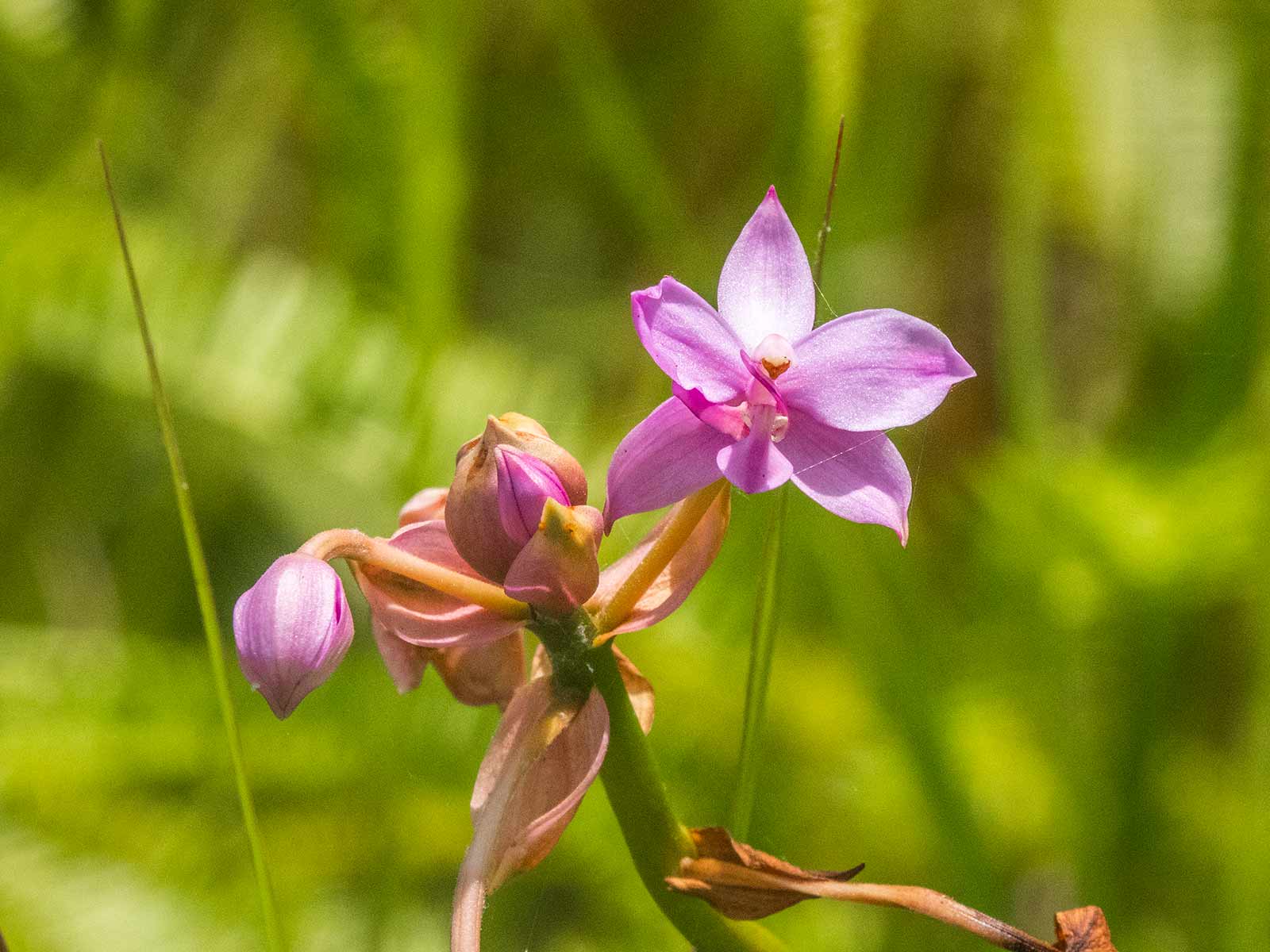
But this time, it was different. Here, the orchid was in its native range. Seeing it growing freely along the roadside felt right, and I could instantly understand why it thrives so easily when introduced elsewhere. It was a moment of small botanical joy, made even sweeter by knowing it belonged here.
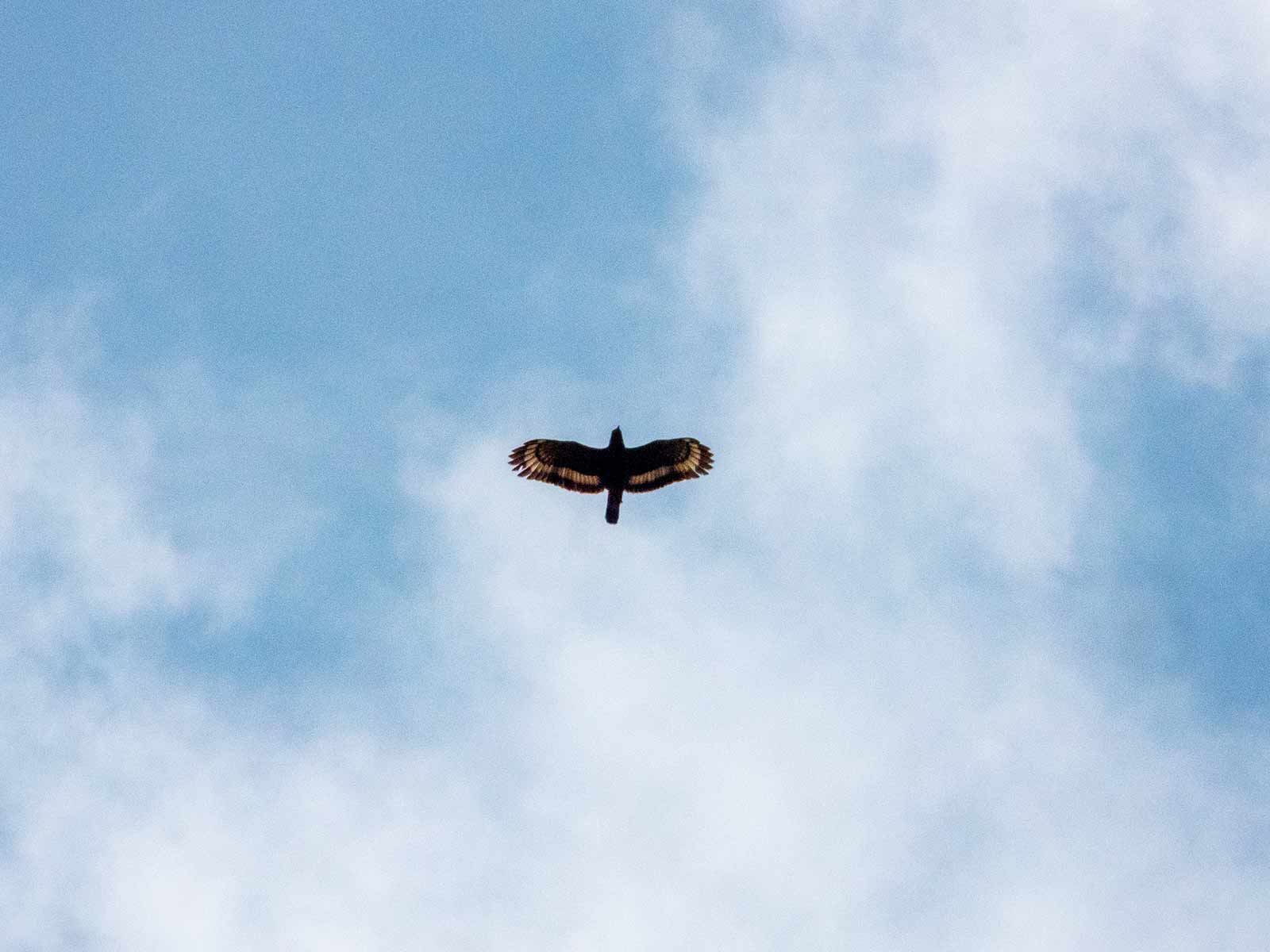
On our first few visits of exploring Hornbill Valley, our sightings were somewhat limited. Swifts and swallows were a constant presence here, swirling above us in their hundreds. Most birds remained at a distance, flitting between high branches or disappearing quickly into the foliage. One notable exception was an eagle soaring gracefully overhead, briefly breaking the stillness of the sky. Though the close encounters were few, the setting itself was captivating and gave us hope that with patience, better sightings would come.
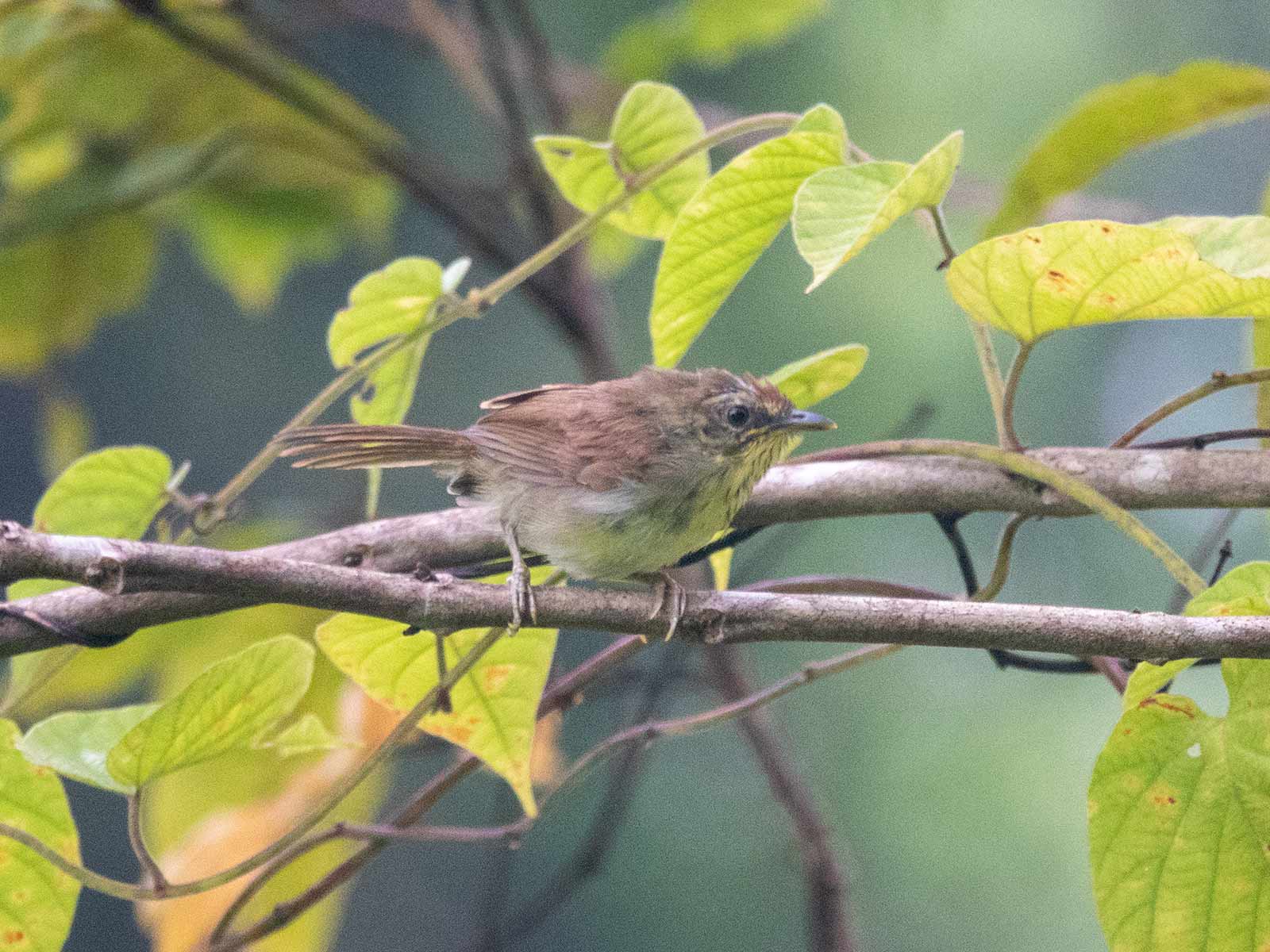
Determined to try again, we returned the day before our departure and stopped at a small bridge overlooking a shallow water pool. We waited quietly, expecting some bird to arrive for a drink or a quick bath. None came. Disappointment lingered, though something in our gut told us the place held life. That’s when two tiny prinias appeared, clinging to grass stems with their delicate claws, filling the air with sharp, insistent screeches — a small but welcome sign that the valley’s voices were alive.
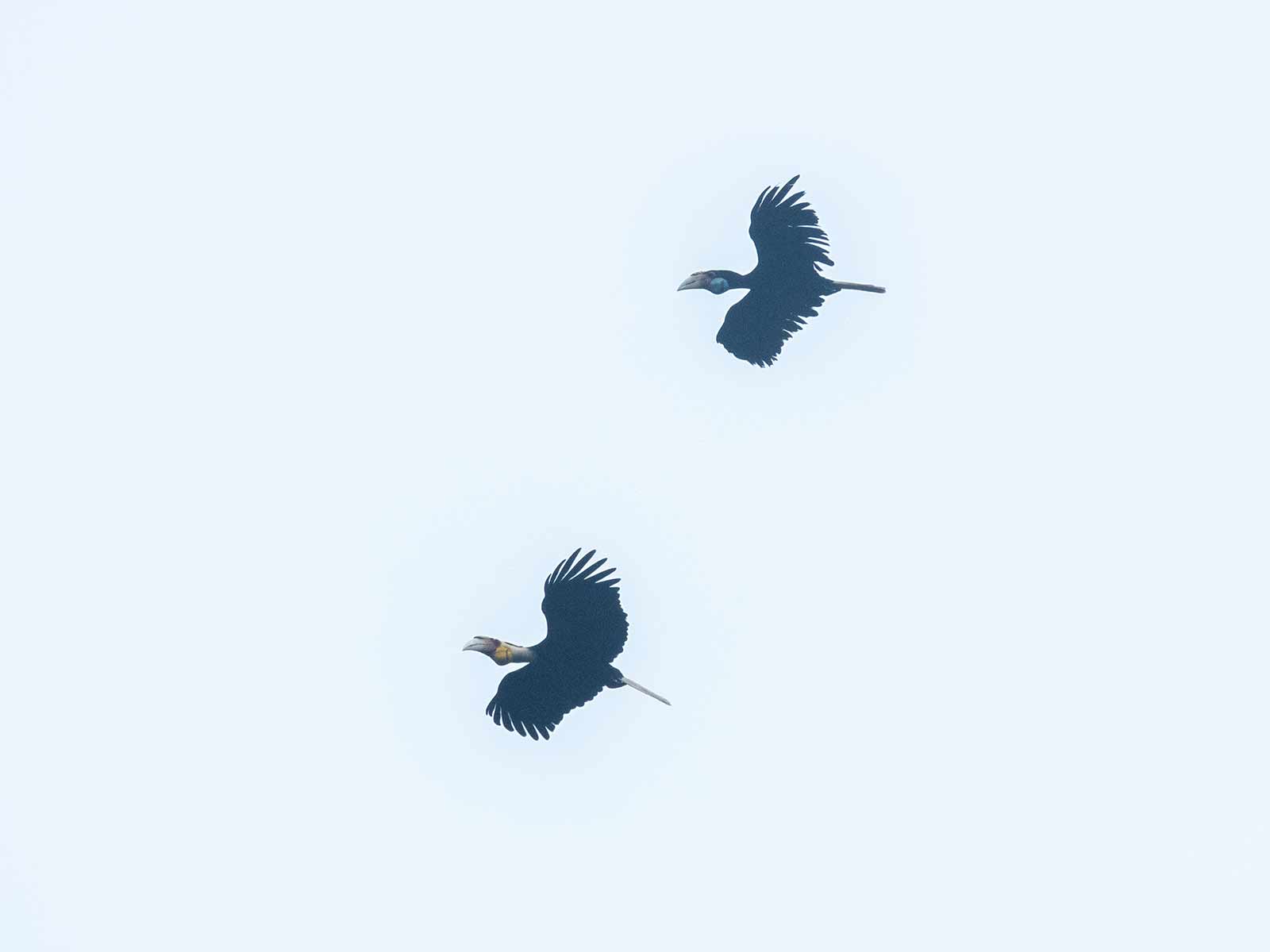
Not ready to give up, we drove further down the road to the far end of the valley, where a chorus of bird calls echoed from deep within the trees. We couldn’t see the singers, but their songs revealed that the area was teeming with life just out of sight. Then, as we finally decided to call it a day, two black hornbills with long tails suddenly appeared, their black bodies and strong wingbeats carrying them swiftly across the valley. They flew high and fast, but that brief crossing filled us with joy. It was enough to convince us to return the very next morning, before leaving Taman Negara, for one last hopeful try.
The following morning, after enjoying a delightful display of Blue-crowned Hanging Parrots at the resort where we stayed, we set out once more for Hornbill Valley. The moment we turned onto that familiar road, we could feel the difference — the air itself seemed alive, vibrating with the calls and songs of birds hidden in the greenery.
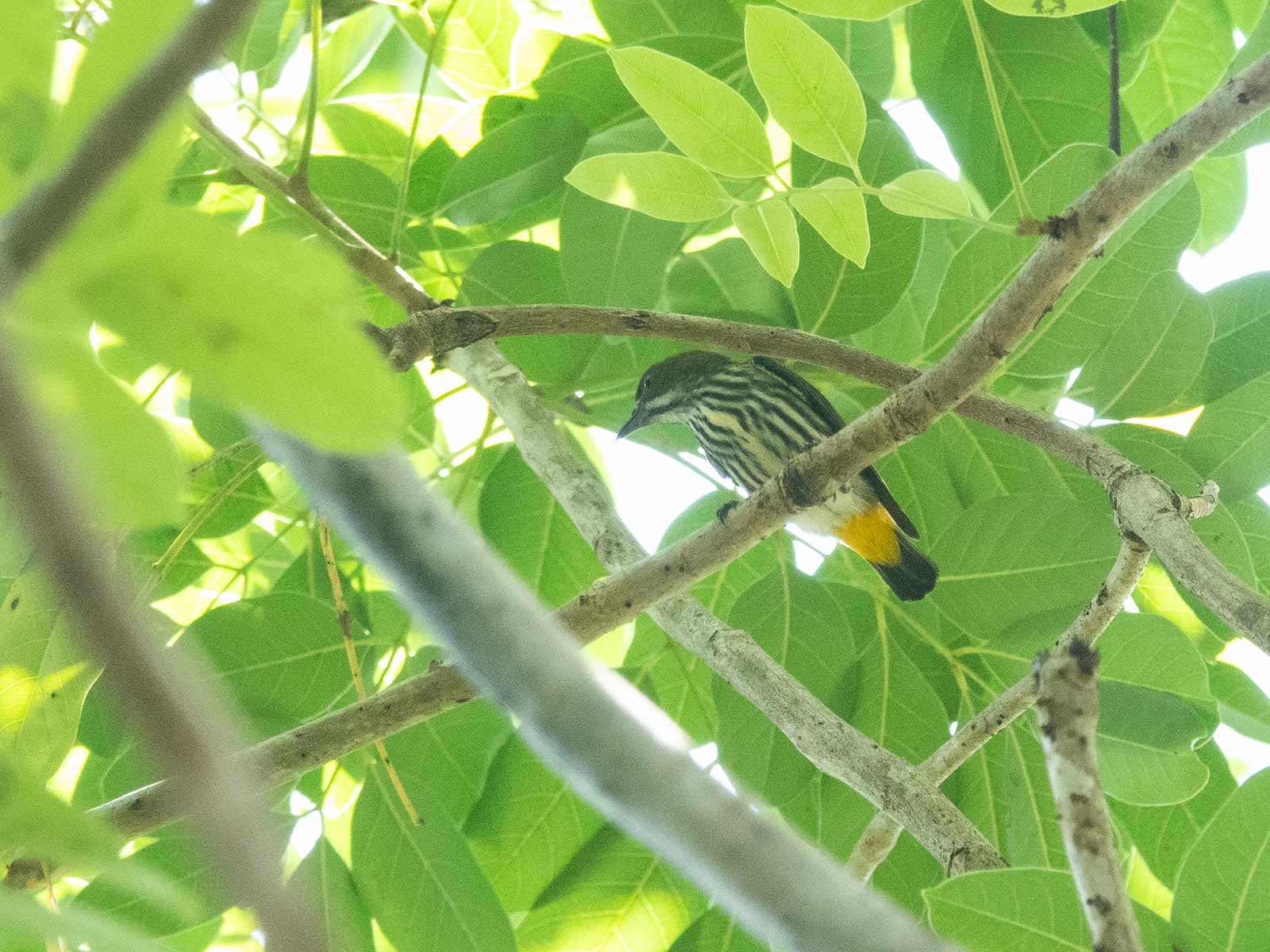
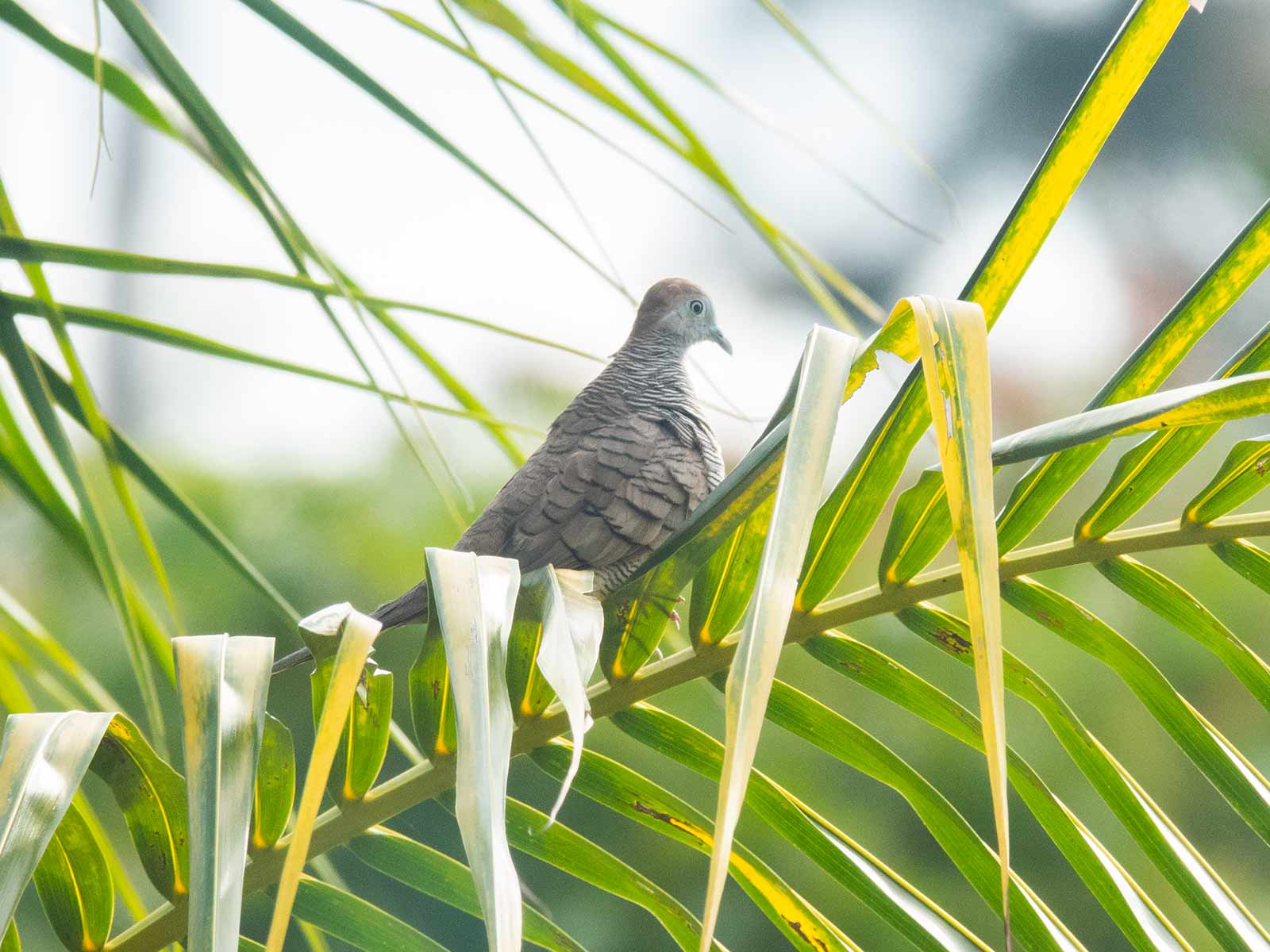
The road here was wide, which meant that whenever we spotted a bird at one end, we couldn’t simply dash across to the other without losing precious seconds. Still, in our eagerness, we found ourselves hurrying back and forth, trying to catch every glimpse we could. Our efforts were rewarded with sightings of species like the bright Black-headed Bulbul, the Mountain Tailorbird, the Zebra Dove, the charming Moustached Babbler, and the vibrant Black-eared Barbet. Each sighting added a burst of colour and energy to the already lively valley.
Soon, we came across a large tree that was absolutely alive with bird activity. It stood tall and a little way off from the road, but with our binoculars, we could clearly make out the movement among its branches. Pink-necked Green-Pigeons were perched high up, flying in and out of the tree in small flocks, their soft colours blending beautifully with the foliage.
Then came the sound we had been waiting for — the distinctive wingbeats of a bird we had been longing to see. “Hornbills!” we yelled to each other almost in unison, eyes scanning the sky. Two of them appeared, gliding effortlessly before Vinod managed to click a few quick shots. They landed right on the same tall tree where the pigeons were feeding. Even from that distance, their size made them impossible to miss; we could watch them leap across branches and take short flights to nearby trees without even raising our binoculars.
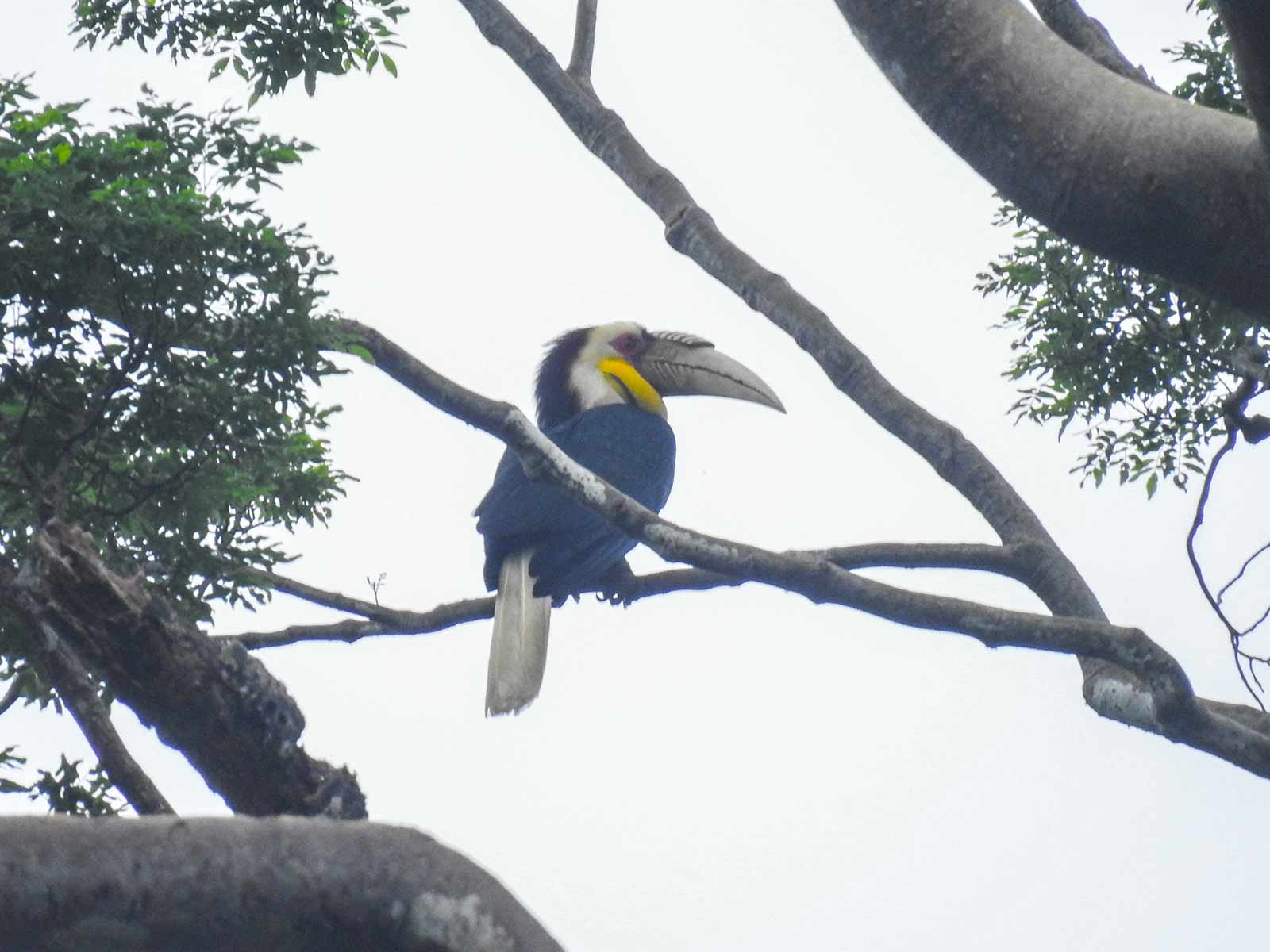
Through our lenses, we confirmed the ID — Wreathed Hornbills, the same species we had encountered earlier at Nameri National Park. It wasn’t a lifer for us, but still, the thrill of watching them in the wild never gets old. Typical birdwatcher mindset — a mix of joy and that cheeky “ah, not a lifer” feeling, followed by a laugh.
With our hearts still buzzing from the hornbill sighting, we decided it was time to head back to the resort and indulge in the wide variety of dishes waiting for us at the buffet breakfast. But just as we were about to leave, some movement in the treetops caught my attention — monkeys leaping from branch to branch. In Malaysia, every monkey species is fascinating to watch, each with its own quirks and character, so I stopped in my tracks.
From the brief glimpse I managed, combined with their size and a few distinct features, a thought flashed through my mind — could it be a Proboscis Monkey? But almost immediately, I knew the range didn’t match; they weren’t found in this area. Still, the sighting was enough to make me curious. There seemed to be two individuals — one large, one small — hidden in the thick foliage. They didn’t emerge again, but the trees were alive with movement and chatter, as if a whole drama was unfolding behind the leaves.
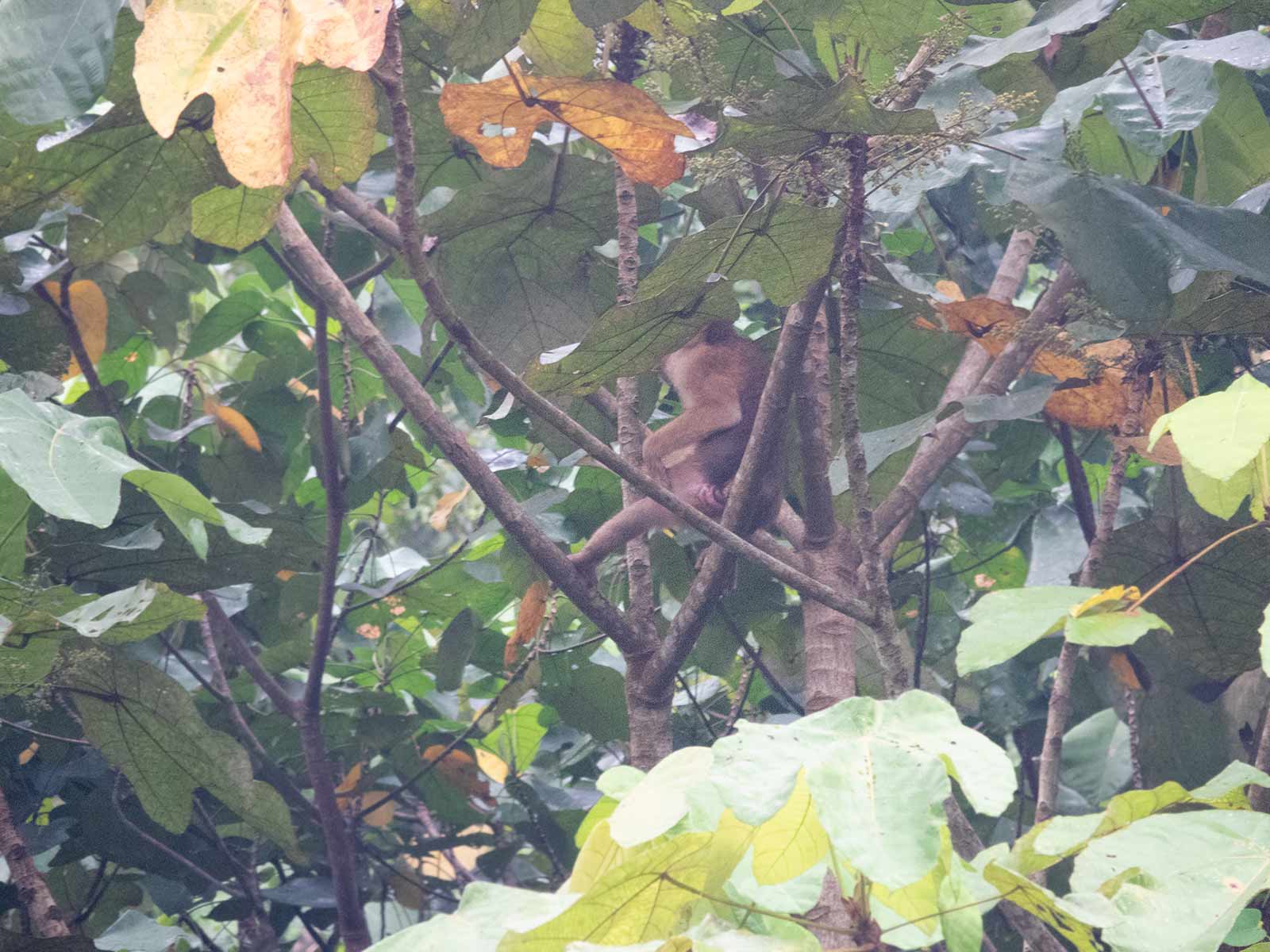
Vinod, equally intrigued, jogged a short distance down the road to try and get a better view. But even from that angle, the monkeys remained elusive, their rustling and calls the only clues to their presence. After waiting patiently for a while with no success, we finally admitted defeat and returned to the resort.
Breakfast made up for the disappointment — an enormous spread that we enjoyed without holding back, knowing we had a long journey ahead. With full stomachs and happy hearts, we packed up and set off for our next and most eagerly awaited destination — the cool, bird-rich haven of Fraser’s Hill.
And guess what? The hill welcomed us with the very same monkeys we had been straining to see in Hornbill Valley. This time, they weren’t hiding at all — the Southern Pig-tailed Macaques were right there, in full view. We watched them closely, admiring their sturdy build, expressive faces, and the comical way they used their short tails for balance. It felt as if nature had decided to reward our patience, saving the best view for our arrival.